AmplifyWorld TGE coming soon!
The Artist Fund
As you may know, the whole point of AmplifyWorld is to find and create ways for artists to earn a sustainable income. At the centre of everything that we do is the Artist Fund - “a money pot for distribution to artists”.
While AmplifyWorld Stake is gathering momentum and we hit our V1 milestone, we feel it’s time to share our thinking around AmplifyWorld AMI - a prediction market for music where an artist shares in the revenue of specific events.
If you’re not familiar with prediction markets, head on over to Polymarket and take a look. Essentially, you can bet on the outcome of a real-world event, usually a YES or NO answer such as “Will Stormzy release a track in June?” - when the event happens and the outcome is known, the winners receive their proportional share of the total pot for that question.
Where does this fit with helping artists with a sustainable income? Well, if we have temporal data on artists and their releases (we do), we can then allow others to speculate on their success… However, in our case, we split the profit from the challenge outcome with the artist. Let’s think about that for a minute.
An artist releases a track, they have a landing page with presaves, links to Spotify, Apple Music, etc. Every time a user interacts with this page (and the tracks on other platforms), we have data, and the artist progresses with their marketing (and hopefully revenue). The user/fan has a challenge on the artist's landing page “will this track reach 50 presaves by Friday?” or “will this track make 100,000 Spotify streams by May?” - the user can then agree or disagree with this by staking some AMPS on YES or NO. The more people that do this, the more the pot increases. When the event challenge is over and the outcome is verified, the pot pays out to the winners. The artist, however, gets a share of the pot or the profit from the pot no matter the outcome.
This mechanism potentially encourages users/fans to promote the track, and incentivises the artist to work harder in their promotion. An artist with three challenges for a release that has an average of $10,000 staked per challenge event could make $750 - more than they are ever likely to make from streaming services and with a likely wider reach (and more streams/sales).
We haven’t fully worked out all the things yet. We’re looking at HyperLiquid despite the incredible cost of access, as well as various other systems that we can tie into, and potentially our own bespoke system. All options are on the table at the moment.
The key areas are:
The Artist Fund
The Data
The Oracle
Resolution and Validation
The Front-End user experience
Over the past few months, we’ve been exploring the front end experience and transforming the data from AmplifyWorld Link to give us a better view of how to present a system like this (to non-defi natives) and how we can create a (cultural) movement index for artists based on their data.
A good early example of this is demonstrated in the following screenshot:
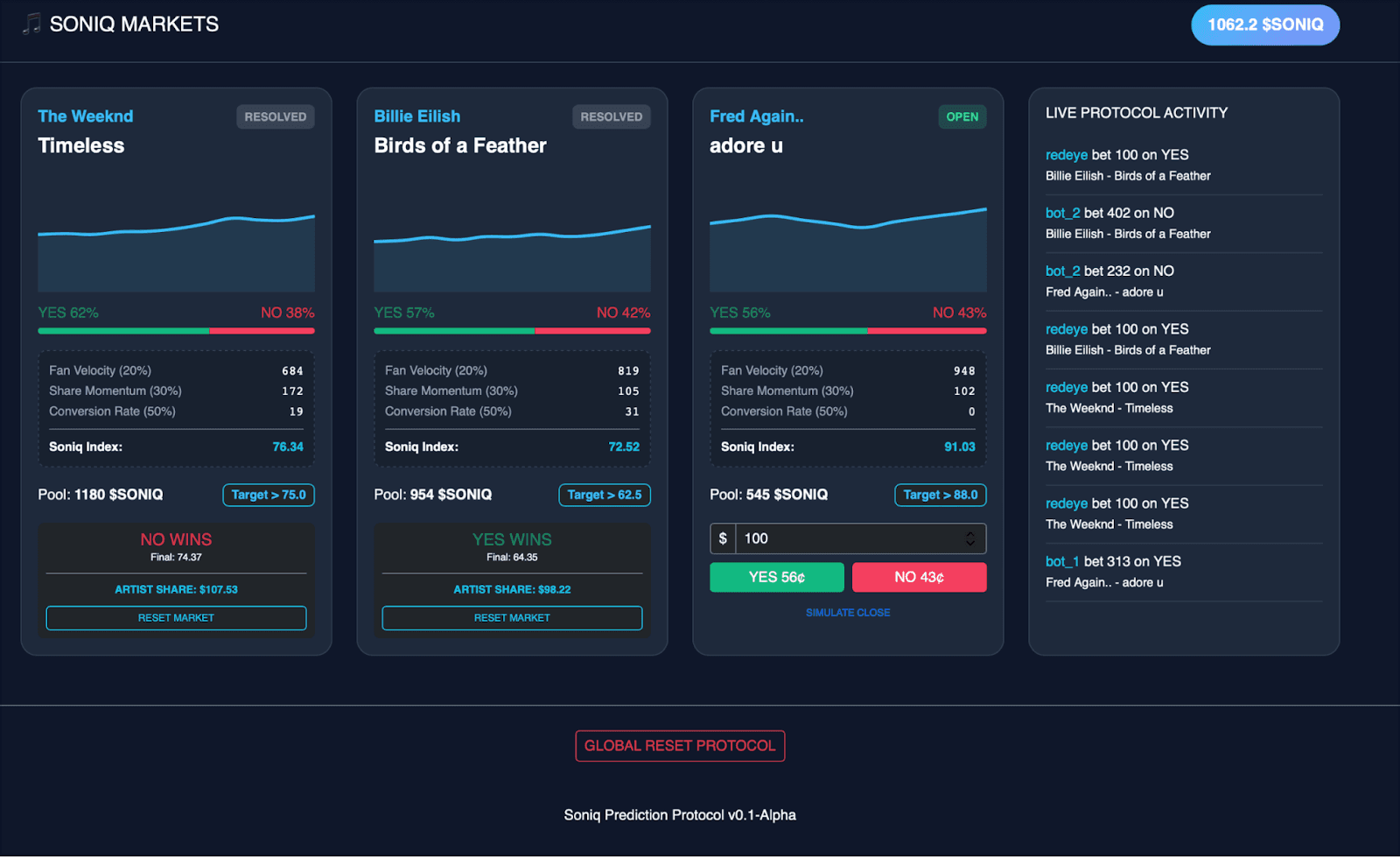
This demonstrates a typical defi type view of various artists based on a Movement Index calculated from simple metrics over time such as views of landing page (Fan velocity), shares, and presaves (conversion rate). This is data that has been transformed and held in the Oracle.
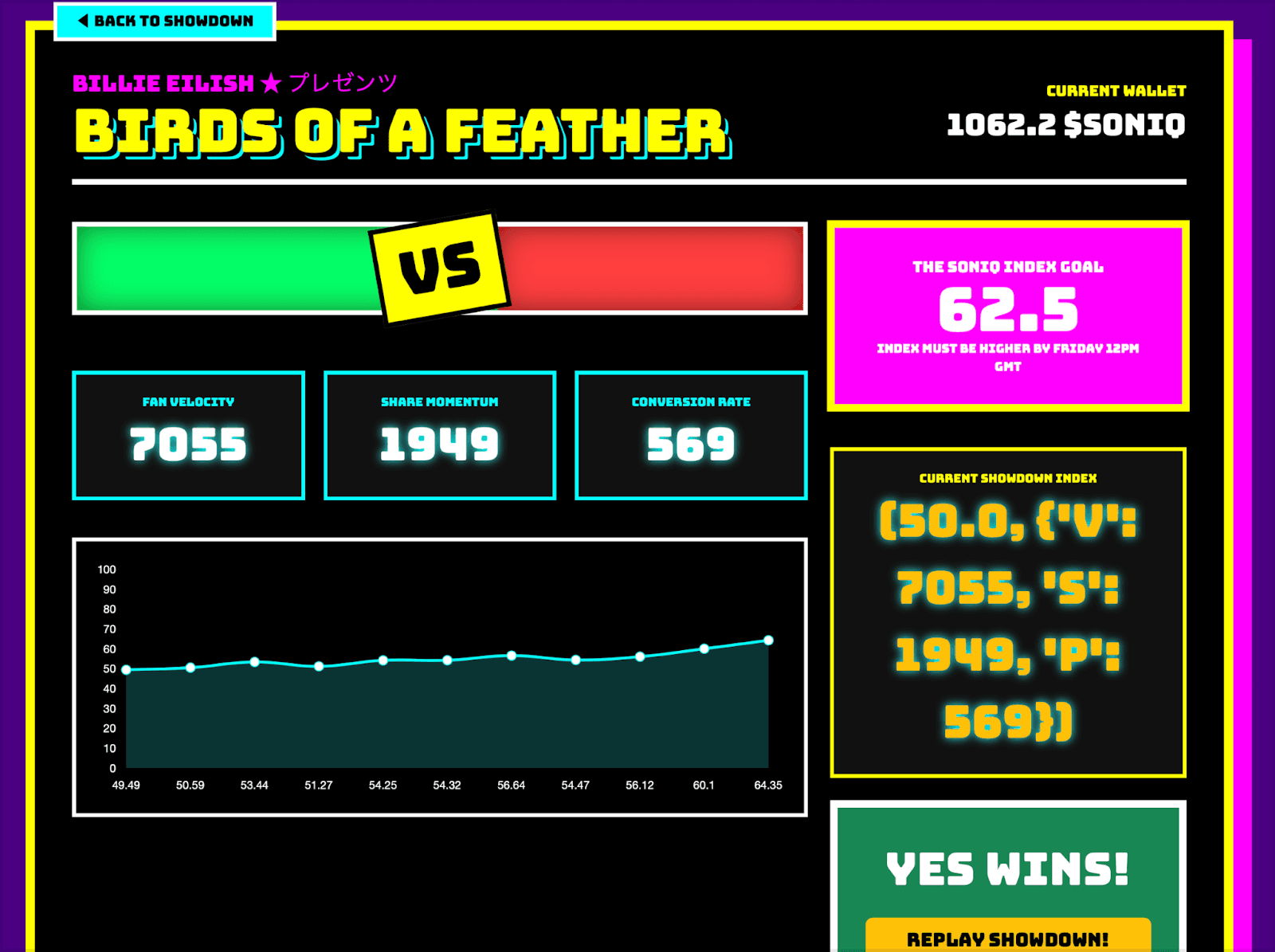
Another early example based on the same data, based loosely on a UK TV show from the 2000’s.... The idea here is to present exactly the same data as the previous example but in a more fun and accessible way. It kind of worked. We’ll iterate more.
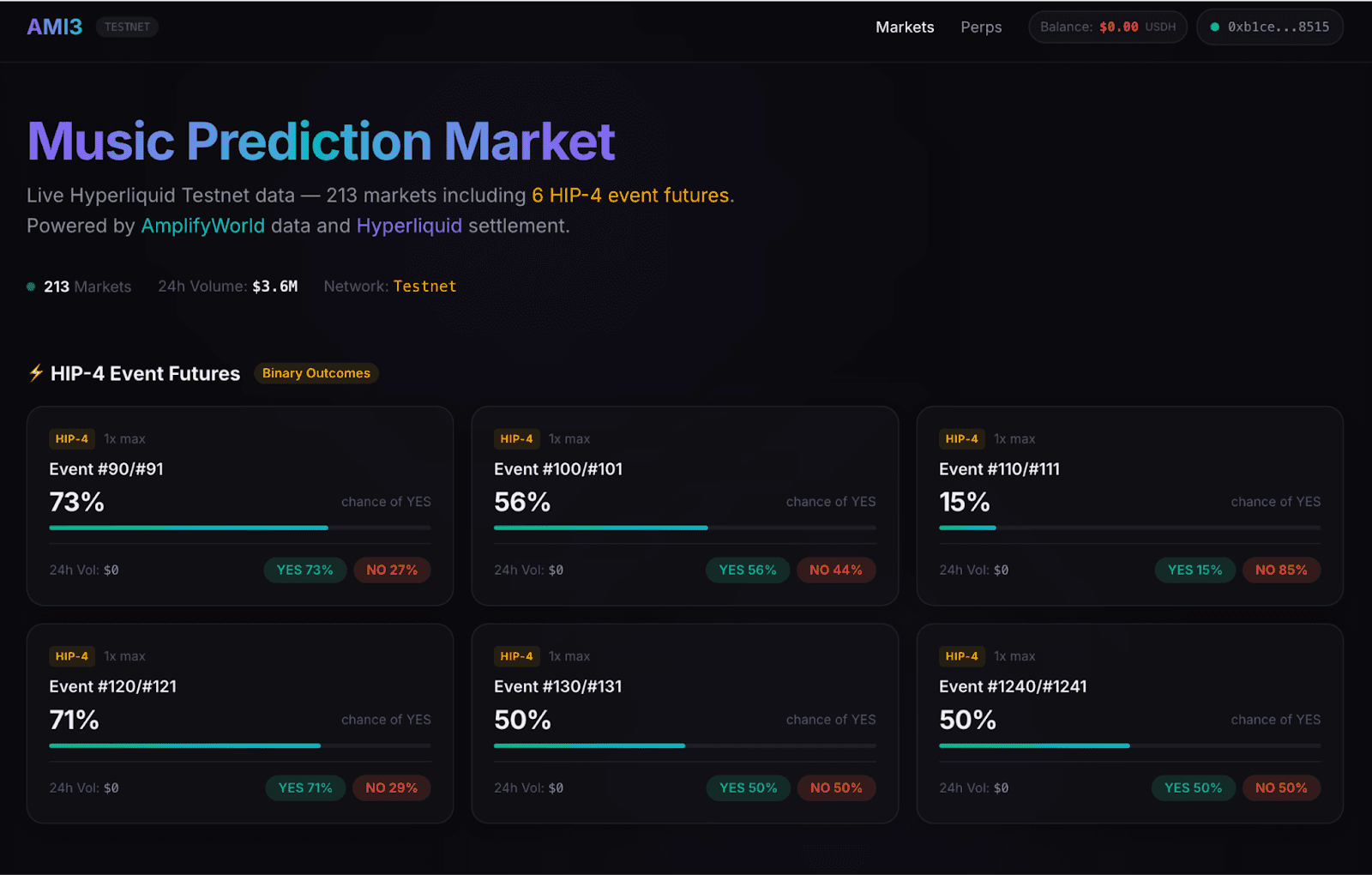
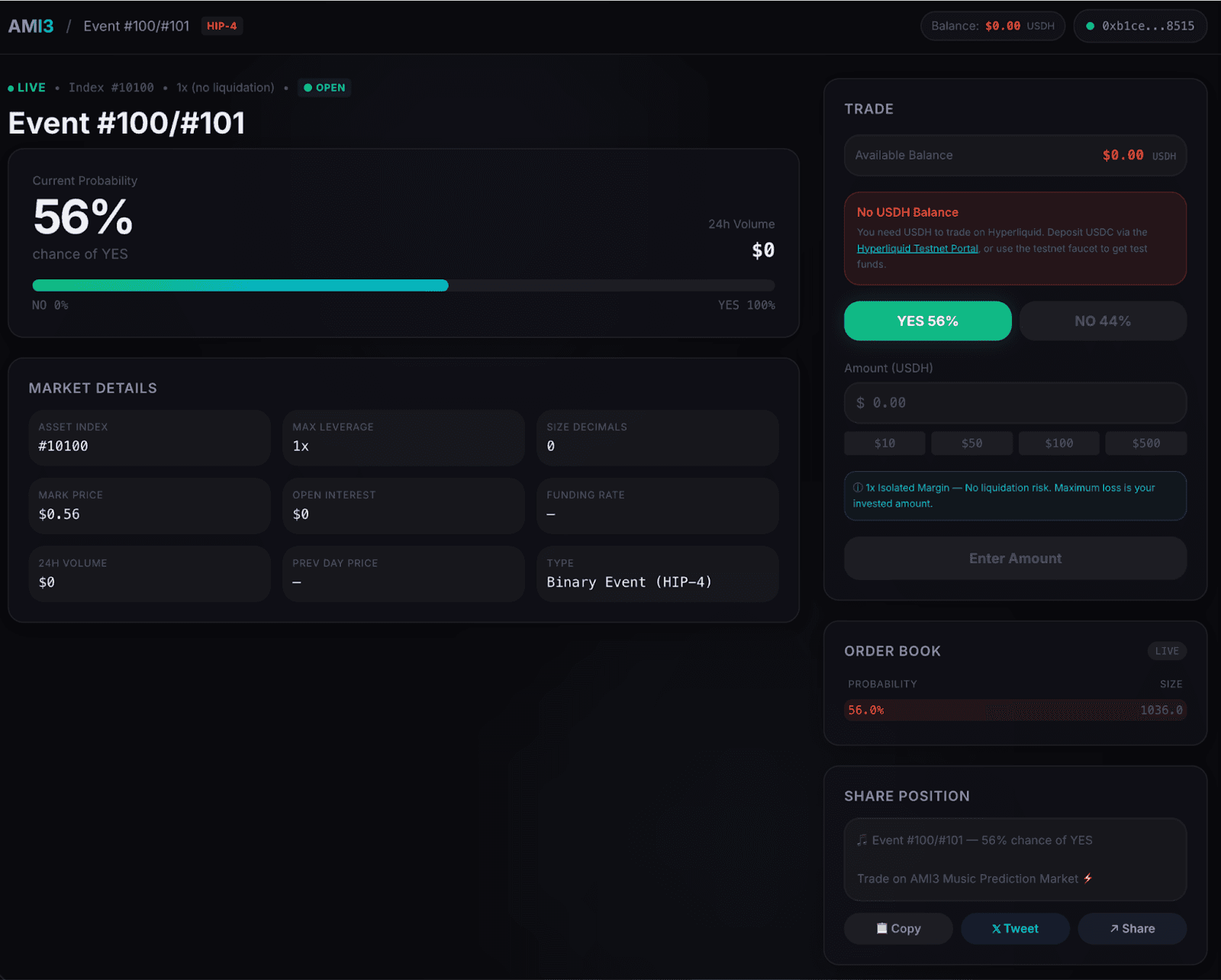
Hopefully, you can start to see where we’re going here. The next iteration we’ve been working on is a live HyperLiquid test - where we’re pulling back their HIP4 markets and testing how things work. You can see a couple of screenshots below from the working POC. No conclusion here yet, and getting on the HyperLiquid gravy train is expensive.
We’ve got a long way to go to get a production-ready system, but hopefully, this gives a good direction of travel and shows our thinking. We can’t do this without the community, and now more than ever, we need artists that are hungry for new ways to monetise their art.